

Opinion
Like many by-elections, the battleground has left political casualties strewn across the battlefield but how do we assess just who were the winners and who were the losers? That challenge became even more tricky with the outbreak of hostilities between America and Iran. I had pondered not bothering to post this - it was written before the war on Iran started - but it seemed to me that there was not much point in that either. So here we are - largely unedited.
Labour lost. Or maybe “Love’s Labour’s Lost.” Okay, that’s not the most penetrating quote but the puzzle for Starmer is how to counter voters’ appetite for insurgency and satisfy their hunger for more.
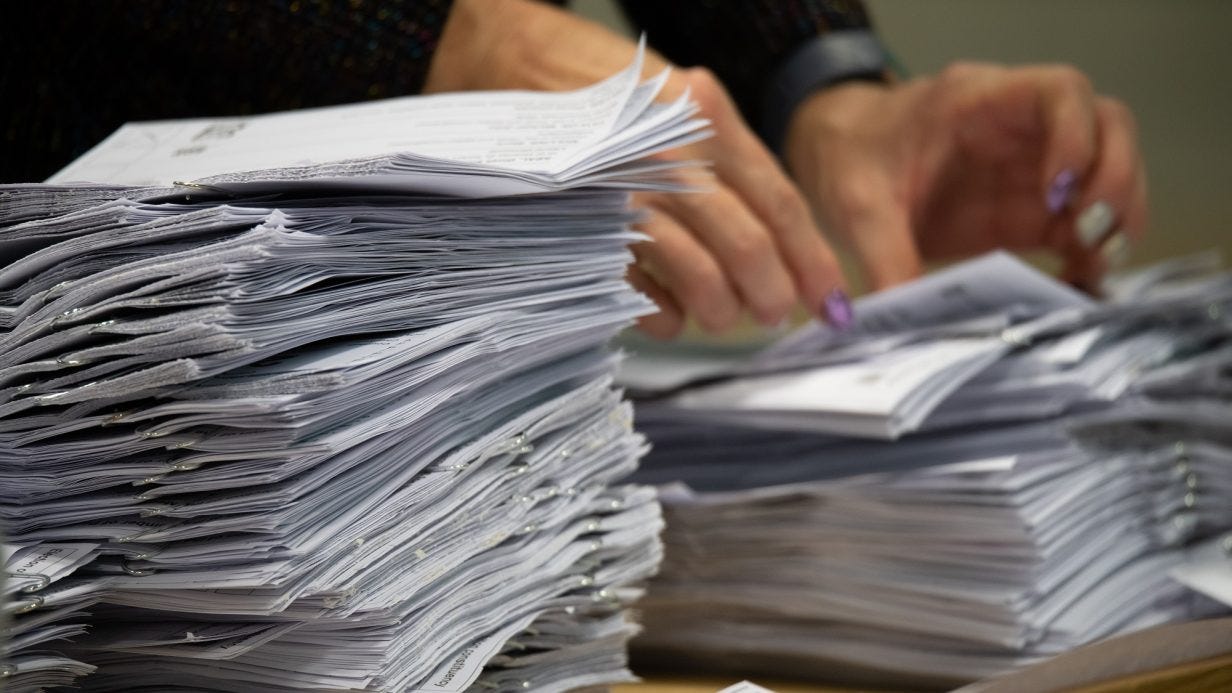
The swing against Labour should set alarm bells ringing for its MPs and would-be MPs in the county - voters have discovered that there are times when their voice counts more than others.

Leader Starmer may be right in his diagnosis that voters are angry but doesn’t appear to accept that the anger is directed at him but some other force. Is he on borrowed time? Possibly but ironically, you can argue that he is safe for now as those who want to trigger his downfall don’t have an alternative successor plan around which the party can unite. It looks like their campaign will otherwise burn up as it hurtles back to planet earth.
The Tories lost but not quite as badly as Labour. Again, not the most incisive analysis but they too have the same conundrum as Labour. Just how does the party rebrand itself in a way that convinces voters that the party is standing up for what Theresa May coined as the “just about managing?” as well as those who want a more radical programme and those who are leaving because they suspect a plot to re-enter the EU.
There is a policy vacuum on key issues, for example. What precisely is its position on irregular migration and how to stop boats crossing the channel? It’s difficult to put any kind of spin on a result that was the worst by-election in its history.
The Reform Party: Has discovered that the flipside of being outside the mainstream has a limited shelf-life. Trading on its slogan that “we are not like the others” goes so far but can that really sustain it for the next three years or so? And for all his political guile, Farage’s magic touch has become a touch jaded. It may sweep up votes in a general election but his avuncular man-of-the-people image has lost some of its sheen. Progressive politics works to the left as well as the right.
The Green Party: Winning is becoming a habit - almost. The party that struggled for years to get a foothold in politics in the Garden of England has discovered a way of winning that capitalises on voter unease about the big parties. From scrabbling around for votes in the foothills, it has hoovered up support in a way in which it poses a threat to the Lib Dems as much as the Tories and Labour. The possible dilemma comes where both parties see support that is evenly spread in seats which are three-way marginals. On issues like water pollution and house-building, it is on similar ground; will tactical voting become common practice?
The Lib Dems: Once the repository for protest votes, the party now has the Greens fighting on another flank. Issues like water quality ought to be natural territory for Ed Davey and his gang but it no longer has exclusive access rights; house-building, for example and concerns over concreting over the countryside are no longer the preserve of the party. However, it can point to a significant breakthrough at the general election when it returned an MP in Tunbridge Wells. And it has cemented its role as the official opposition at County Hall, proving that you can be an effective political force whatever the size.
Can it build on its momentum? That is the key for a party undeniably taking advantage of the woes of Labour and the struggles of the Conservatives to convince enough supporters to back them.